
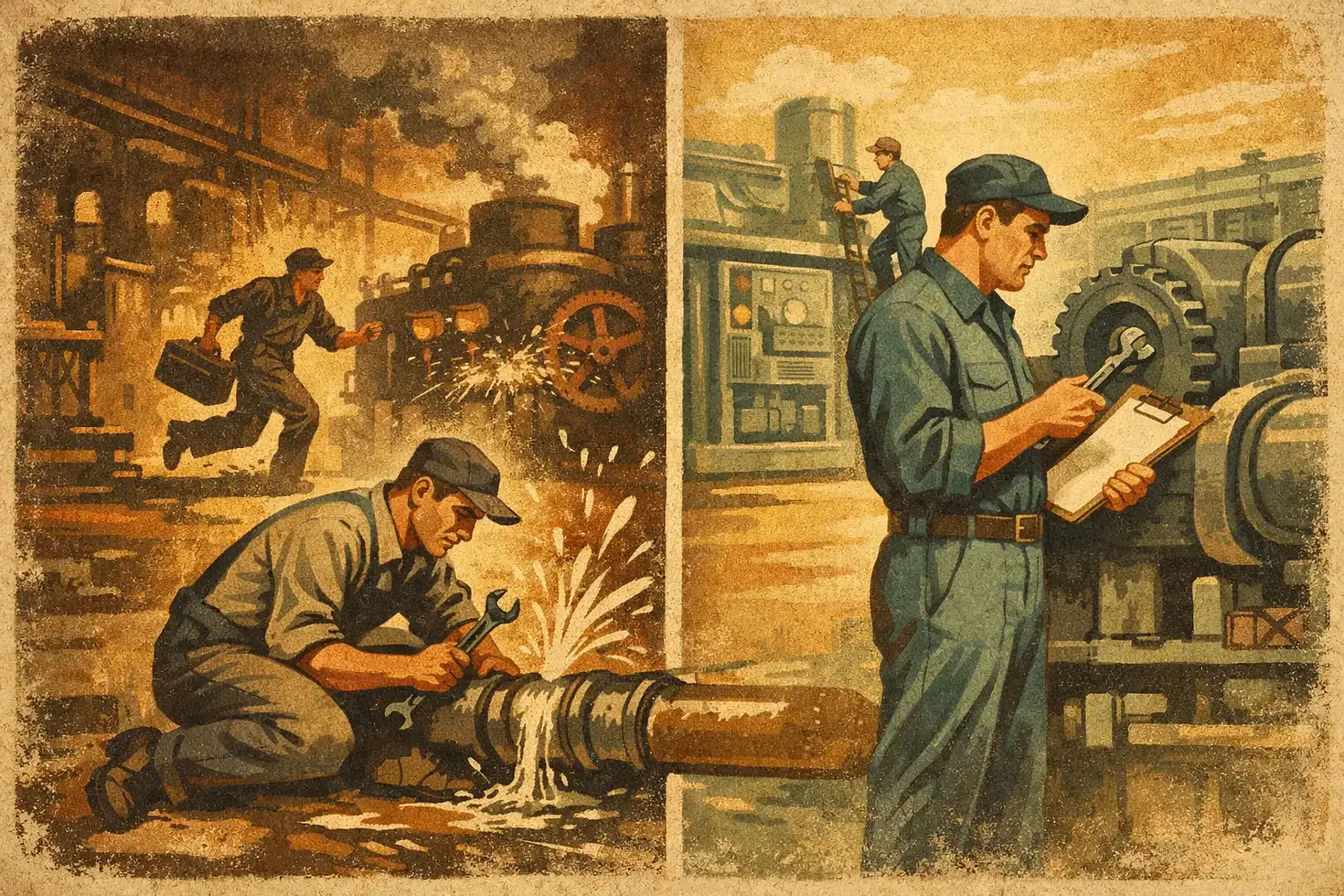
Reactive Versus Preventive Maintenance Choices

A leaking restroom fixture at a retail store, a door that will not latch at an office, or a failed light in a common area can become an operational problem fast. Reactive versus preventive maintenance is not simply a choice between two repair styles. It determines how much downtime a property experiences, how predictable maintenance costs are, and how often staff, tenants, or customers are disrupted.
For California property managers, facility teams, landlords, and multi-site operators, the strongest approach is rarely all reactive or all preventive. The right balance depends on the asset, its condition, its impact on operations, and the cost of failure. Knowing where each approach fits helps keep maintenance decisions practical instead of rushed.
Reactive Versus Preventive Maintenance: The Core Difference
Reactive maintenance means responding after something has failed or stopped working. A technician is dispatched when a sink backs up, a lock breaks, a circuit trips, flooring is damaged, or a door closer fails. The immediate objective is clear: diagnose the issue, make the repair, and restore normal operations as quickly as possible.
Preventive maintenance is scheduled work completed before failure occurs. It includes inspections, adjustments, cleaning, testing, and timely replacement of worn components. The goal is to identify small issues while they can be corrected during normal service windows, rather than during an urgent call after the asset affects operations.
Neither model is automatically better in every case. A low-cost, noncritical item may reasonably be repaired only when it fails. A restroom, entry door, electrical system, or safety-related fixture that affects access, sanitation, security, or customer experience deserves more planning.
When Reactive Maintenance Makes Sense
Reactive service is necessary. Buildings are used by people, weather changes, accidents happen, and even well-maintained equipment can fail without warning. A fast-response maintenance partner is essential when an issue creates a safety risk, interrupts a tenant or customer, threatens property damage, or prevents normal business activity.
For example, an active plumbing leak needs immediate attention. So does an exterior door that cannot be secured, a damaged floor creating a trip hazard, or an electrical issue affecting a workspace. In these situations, delaying action to fit a maintenance schedule is not efficient. The priority is containment, accurate diagnosis, and a first-time fix whenever possible.
Reactive maintenance can also be cost-effective for simple, inexpensive assets with limited operational impact. Replacing a damaged cabinet pull or a single worn ceiling tile when it becomes necessary does not usually require a formal preventive schedule. The key is recognizing the difference between a minor inconvenience and a repeat issue that signals a larger problem.
The downside is unpredictability. Emergency calls can require after-hours access, temporary closures, expedited materials, and staff coordination. If the same issue returns because only the visible symptom was addressed, costs rise further through callbacks and ongoing disruption.
What Preventive Maintenance Protects
Preventive maintenance turns recurring property issues into planned work. Instead of waiting for a door to stop closing properly, a technician can inspect hinges, closers, thresholds, weatherstripping, and hardware before a failure affects security or accessibility. Instead of waiting for a minor leak to damage a wall or flooring, routine inspections can identify loose connections, worn seals, and drainage concerns early.
This approach is particularly valuable for high-use areas and systems that affect a property's daily function. Restrooms, common areas, storefront entries, tenant turns, break rooms, lighting, parking lot features, and frequently used doors all benefit from regular attention. A small repair completed during a planned visit is generally easier to schedule and less disruptive than an emergency repair during business hours.
Preventive work also improves visibility. A documented inspection can show which items were repaired, what conditions need monitoring, and what replacements should be budgeted. For property managers handling several sites, this reporting reduces surprises and makes it easier to prioritize work by urgency and business impact.
Preventive maintenance does require consistency. An inspection without follow-through does not prevent anything. The service plan must include clear findings, defined next steps, and timely completion of approved repairs.
The Cost Comparison Is About More Than the Invoice
Reactive maintenance may appear less expensive because spending occurs only after a failure. That can be true for low-risk assets. But the repair invoice is only one part of the cost when a failure closes a restroom, delays a tenant move-in, affects a retail entrance, or creates an unsafe condition.
Downtime, overtime, customer complaints, temporary workarounds, water damage, cleanup, and administrative time all add to the real cost. A recurring plumbing issue, for instance, may be less expensive to investigate and correct permanently than to repeatedly dispatch service for backups and leaks.
Preventive maintenance has a known, recurring cost. In return, it provides planned service windows, fewer urgent disruptions, and better control over replacement decisions. It does not eliminate emergency repairs, but it can reduce the number of failures caused by neglected wear, deferred minor repairs, and missed warning signs.
The practical question is not, "Which option costs less?" It is, "What does failure cost this property?" The answer should guide the maintenance strategy.
How to Choose the Right Approach for Each Asset
Start with criticality. If an asset affects life safety, security, sanitation, accessibility, utilities, or a customer-facing area, preventive attention is usually justified. A malfunctioning exit door, repeated electrical fault, or loose flooring in a busy corridor should not be managed as a wait-until-it-breaks item.
Next, consider failure history. One isolated repair may be reactive. The third repair for the same door, fixture, or wall damage needs a closer review. Repeated failures often point to an underlying issue such as incorrect hardware, moisture intrusion, heavy-use wear, poor adjustment, or a repair that addressed the symptom but not the cause.
Also consider timing. Work that can be completed during slower business hours, between tenant occupancy, or as part of a scheduled site visit is usually less disruptive than work performed after a failure. Bundling approved minor repairs during a routine visit can reduce trip charges and prevent a long list of small defects from becoming larger projects.
Finally, consider asset age and condition. Older fixtures and finishes do not always need replacement, but they often need more frequent inspection. If the cost of repeated repairs approaches the cost of a reliable replacement, planned replacement may be the better operational decision.
Building a Maintenance Plan That Supports Operations
An effective plan begins with a property walk-through and an honest list of recurring concerns. Focus on areas with the greatest impact: plumbing fixtures, doors and hardware, lighting, flooring, paint and wall damage, electrical components, exterior conditions, and common-area presentation. The goal is not to create unnecessary work. It is to identify what can cause downtime, safety issues, or avoidable service calls.
Set a service cadence that matches the property. A high-traffic retail location may need more frequent inspections than a lightly used office suite. Multi-family common areas may require seasonal review of landscaping, lighting, gates, drainage, and exterior repairs. A landlord preparing units between tenants may prioritize punch-list work, fixture checks, paint, flooring, and door hardware before move-in day.
Each visit should produce useful information: what was completed, what was found, what needs approval, and what could become urgent if delayed. Clear updates matter because maintenance decisions often involve site contacts, property managers, owners, and accounting teams. A reliable service partner should make status easy to track from dispatch through completion.
Handy Plus LLC supports this model by combining urgent repairs with ongoing multi-trade maintenance, helping clients address immediate issues while reducing the conditions that create repeat calls. The value is not just getting a technician onsite quickly. It is getting clear communication, accurate diagnostics, and clean follow-through that keeps the property moving.
A property does not need a complicated maintenance program to be well managed. It needs consistent attention to the items that affect people, operations, and the condition of the building. Handle true emergencies fast, plan for predictable wear, and treat repeat repairs as a signal to look deeper before the next failure sets the schedule.


Comments