
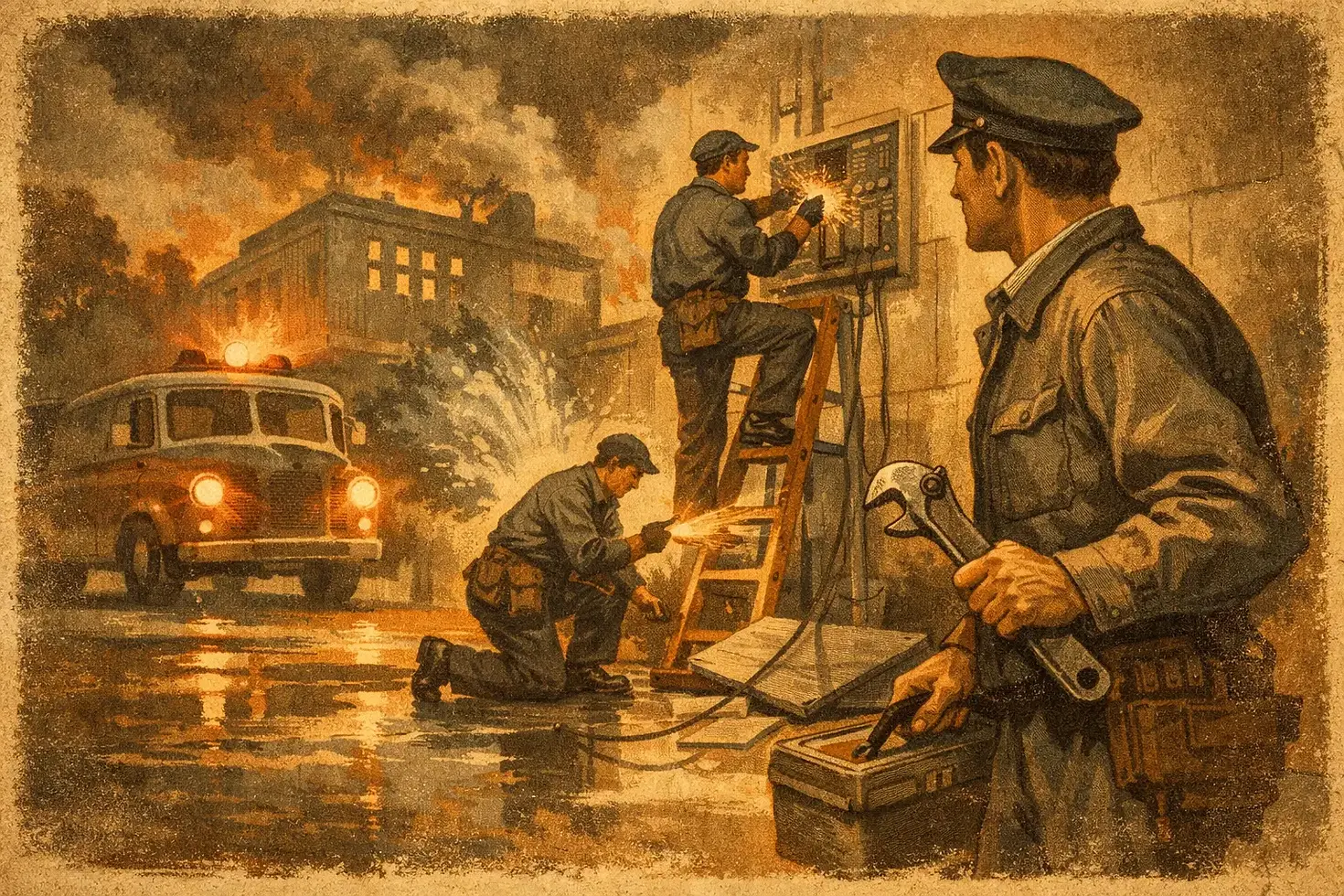
Emergency Facility Repair Service That Responds

A failed restroom valve at 7:10 a.m. can turn into a tenant complaint by 7:20, a slip hazard by 7:30, and a business interruption before lunch. That is why an emergency facility repair service is not just another vendor category. For property managers, retail operators, and facilities teams, it is a frontline operational resource that protects uptime, safety, and reputation when something breaks without warning.
The real issue in an emergency is rarely the repair alone. It is the chain reaction that follows. A door that will not secure creates a safety concern. A plumbing leak can damage flooring, drywall, and adjacent suites. An electrical failure can interrupt sales, tenant comfort, or basic building operations. Fast response matters, but so does accurate diagnosis, clean execution, and communication that keeps everyone informed while the issue is being contained and corrected.
What an emergency facility repair service should actually deliver
A true emergency response partner does more than show up quickly. Speed without follow-through creates repeat visits, tenant frustration, and more downtime. The standard should be immediate triage, practical troubleshooting, and a path to resolution that matches the urgency of the site.
In most facilities, emergencies fall into a few predictable categories. Electrical issues include outages, tripped circuits, failed fixtures, exposed wiring, and equipment that suddenly stops working. Plumbing calls often involve active leaks, clogged drains, overflowing toilets, failed shutoff valves, or water heater problems. Entry and security issues include broken locks, damaged closers, doors that will not latch, or storefront hardware failures that affect opening and closing. Interior damage can involve flooring hazards, broken cabinets, damaged drywall, or safety concerns caused by wear or impact.
The value of a multi-trade provider is simple. Problems rarely stay in one lane. A leak may require plumbing, drywall repair, flooring replacement, and paint. A forced door may need carpentry, hardware replacement, and a quick touch-up to keep the entrance presentable. When one service partner can coordinate multiple scopes, the property gets back to normal faster and the manager spends less time juggling vendors.
Why downtime costs more than the repair
Many emergency calls start as a modest issue that became expensive because it was delayed, misdiagnosed, or handled halfway. A leaking supply line is one example. The repair itself may be straightforward, but if the response is late, the cost expands into water mitigation, damaged finishes, disrupted operations, and upset occupants.
For commercial properties, the stakes are often immediate. Retail stores can lose selling time. Offices may deal with access problems or employee disruption. Managed properties face tenant dissatisfaction and possible liability if safety hazards are not addressed quickly. Even in residential settings, an urgent repair can affect habitability, security, and resident trust.
There is also the administrative cost. Every unclear update leads to another phone call, text, or email. Every missed arrival window creates scheduling friction. Every repeat callback chips away at confidence. A dependable emergency response process reduces all of that. The best providers do not just repair the issue. They reduce the amount of management required from your side.
How to evaluate an emergency facility repair service
If you are responsible for one site or fifty, the right question is not simply, Can they respond? It is, Can they respond in a way that lowers operational risk?
Start with coverage. A provider that can handle electrical troubleshooting, plumbing repairs, door and hardware issues, minor carpentry, flooring damage, painting, and general facility corrections will be more useful under pressure than a narrow trade vendor. Emergencies do not arrive neatly packaged, and the handoff between multiple contractors is often where delays happen.
Next, look at communication discipline. You should know when the technician is dispatched, when they arrive, what they found, what temporary steps were taken if needed, and what is required to complete the job. This sounds basic, but it is where many service relationships break down. Clear updates allow property managers and facilities teams to inform tenants, internal stakeholders, or national accounts without chasing the field team for answers.
Then consider first-time fix capability. Not every emergency can be fully completed in one visit. Parts availability, code considerations, or site access can change the plan. Still, a strong provider should arrive prepared for common failures, isolate the issue quickly, and complete as much of the repair as possible during the initial response. Temporary stabilization has value, but only when it is part of a clear completion plan rather than a way to defer the real work.
Common scenarios where response quality matters most
Some emergencies are obvious because they stop operations immediately. Others look smaller but create ongoing exposure if handled casually.
A leaking toilet in a retail restroom may seem routine until water spreads beneath the flooring and the restroom has to be closed during business hours. A front entry door that drags or does not latch can become a security issue by closing time. Flickering lights may point to a simple fixture failure, or they may signal a broader electrical problem that affects safety and business continuity.
This is where practical judgment matters. The right team knows when a repair can be completed on the spot, when an area needs to be isolated for safety, and when a broader correction should be scheduled immediately after the emergency is contained. Fast service is useful. Fast service with good judgment is what protects the property.
Emergency facility repair service for multi-site operations
Multi-site businesses have a different set of pressures. A single bad repair experience at one location can create internal escalations, brand inconsistency, and reporting gaps across the account. For regional managers and national service platforms, the challenge is not only getting someone out there. It is getting consistent execution, accurate status reporting, and a professional on-site presence every time.
That is why process matters as much as trade skill. A good field partner should be able to step into active environments, work cleanly, communicate clearly, and document what happened without creating extra work for the client. In fast-moving markets such as the Bay Area, Sacramento, and the Central Valley, response speed helps, but consistency is what builds long-term trust.
This is also where a one-stop service model becomes more than a convenience. If the same provider can handle urgent repairs, follow-up corrections, and routine maintenance, you reduce vendor sprawl and improve accountability. The person managing the property is no longer rebuilding the service history from scattered invoices and separate contractor notes.
What good emergency response looks like on the ground
The strongest emergency repair relationships are built on a few habits. The dispatch process is clear. Arrival windows are realistic. Technicians show up ready to troubleshoot instead of guess. Work areas are kept safe and professional. Updates are shared in real time, not after the fact. When additional work is needed, the scope is explained plainly so there is no confusion about what was fixed, what was stabilized, and what comes next.
This kind of service is especially valuable for occupied properties. Tenants, customers, and staff do not care that a vendor is overloaded or that one trade is waiting on another. They only see whether the issue is being handled with urgency and control. That perception matters. It affects tenant retention, customer experience, and confidence in the way the property is managed.
For that reason, the cheapest response is often not the lowest-cost outcome. A low bid that leads to callbacks, incomplete repairs, or poor communication usually costs more over time. Reliable service carries a different kind of value. It protects schedules, reduces disruption, and helps keep small failures from turning into bigger losses.
Choosing a partner before the next emergency happens
The best time to evaluate an emergency repair partner is before you need one. Waiting until a leak is spreading or an entry door fails at closing time limits your options and increases the chance of a rushed decision.
A dependable provider should be able to explain how they handle urgent calls, what trades they cover, how they communicate status, and how they move from emergency response to final completion. If they also support ongoing maintenance, that is often a plus because familiarity with the property can shorten diagnosis time and improve results. Handy Plus LLC is built around that kind of practical support - fast response, broad service coverage, and field communication that helps clients make decisions quickly.
Emergency repairs will never be convenient. But they do not have to become drawn-out operational problems. When the right service partner is in place, urgent issues get contained quickly, corrected professionally, and closed out with fewer surprises. That is what keeps a property running when the day does not go according to plan.


Comments